


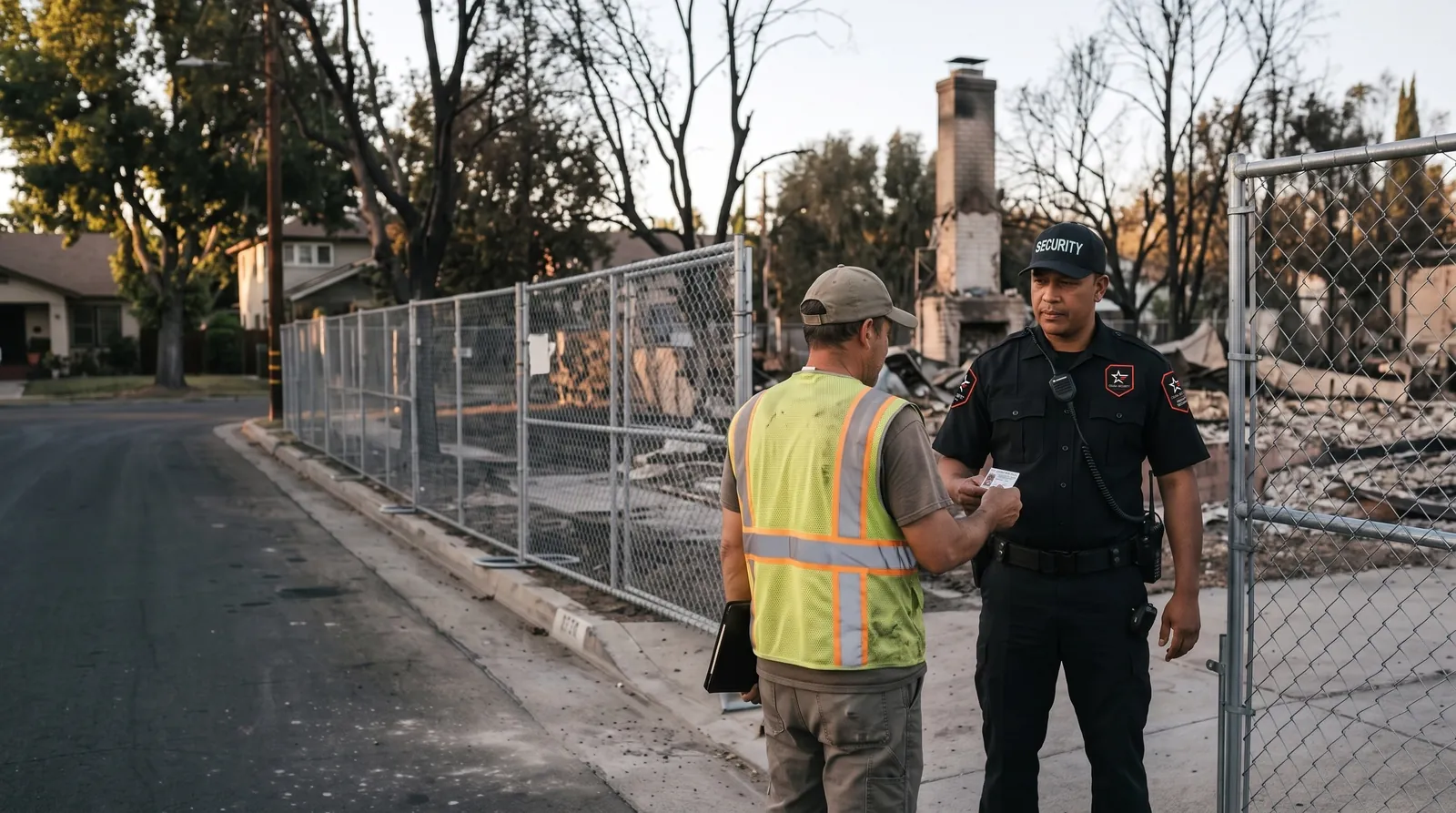
Why do you need security after a fire or disaster?
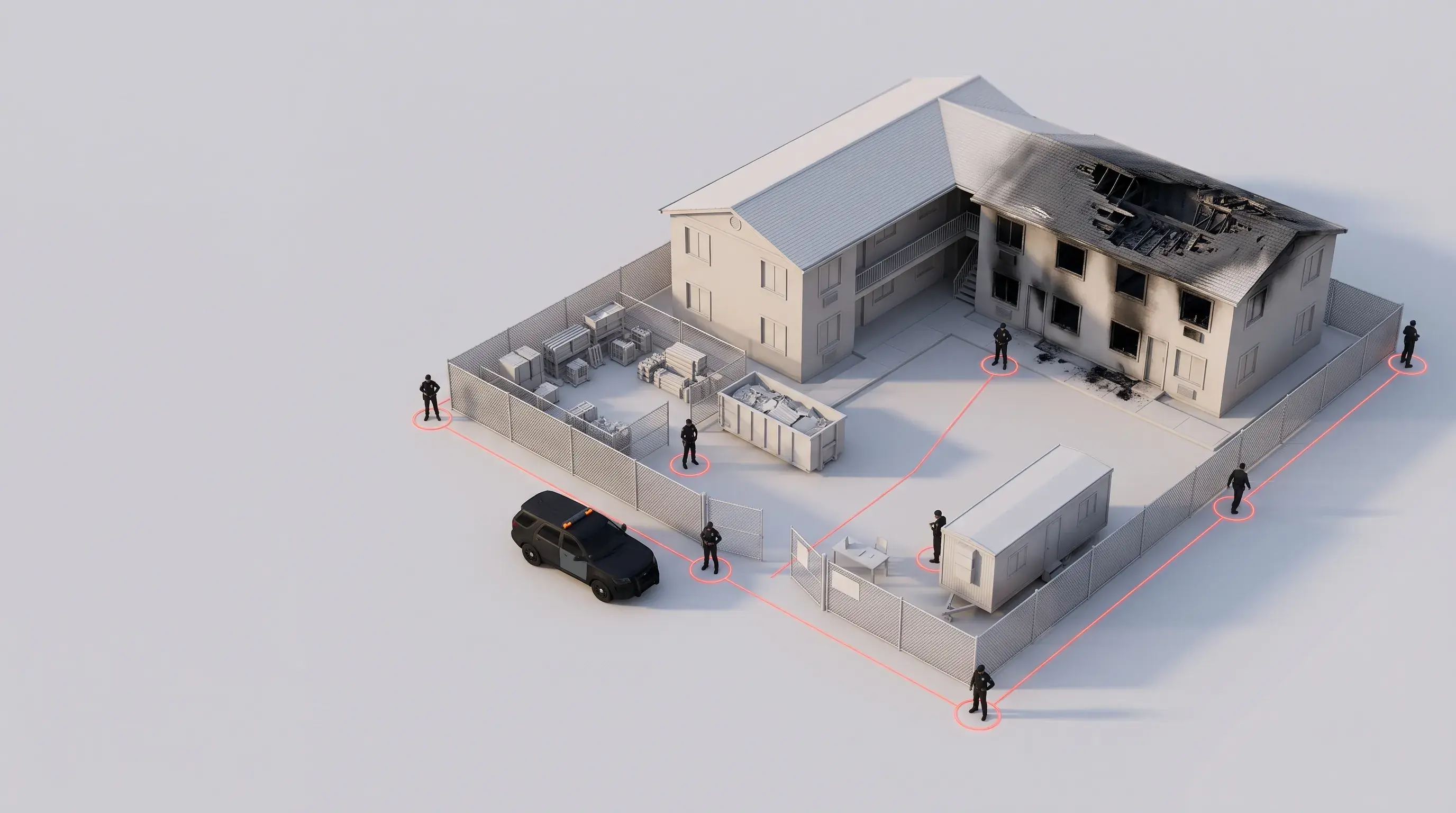
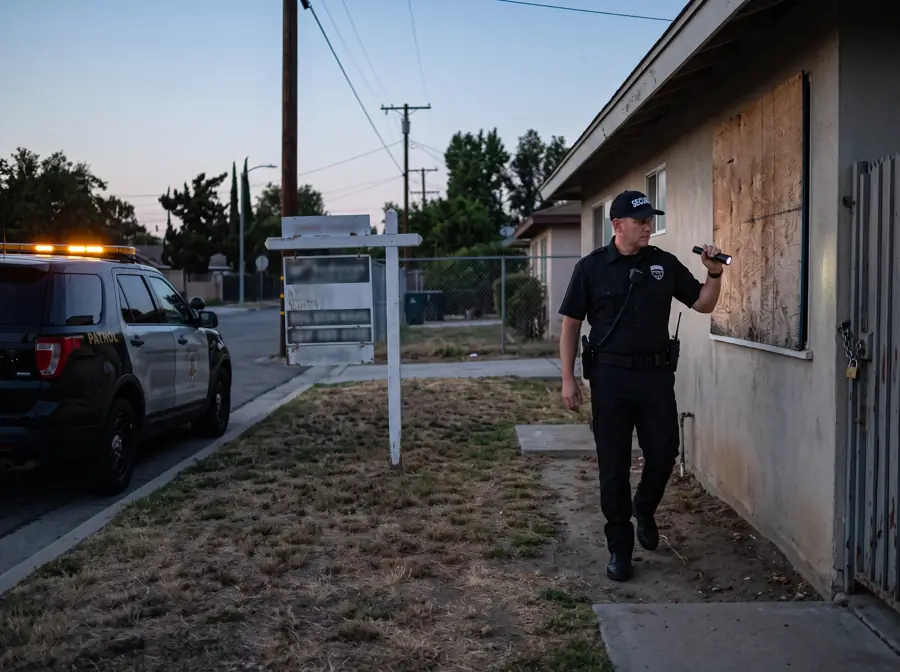
After a fire, flood or storm, damaged properties draw looters, scrappers and trespassers, and an open building is a liability. Disaster recovery security puts officers or patrols on the site to control access, protect equipment and materials, and log everyone who comes and goes while the property is repaired.
On every shift
What the officer does
- Controls who enters the site: owners, adjusters, crews and inspectors.
- Guards damaged buildings, equipment and anything that can be saved.
- Patrols the perimeter, fencing and neighboring lots.
- Watches for flare-ups and hazards and calls them in.
- Logs every visit and incident for your insurer.
Duty gear · California
What a recovery site officer typically carries
The usual kit on a damaged or evacuated property in California. What your officers carry is written into the site’s post orders.
State permit or courseNo permit needed
 01●
Guard card
Carried on dutyThe state guard card stays on the officer for the whole shift.
 02
Uniform
Company issueMarked with the company name, so everyone on site knows who the officer is.
 03
Flashlight
Everyday carryFor buildings without power and sites without lights.
 04
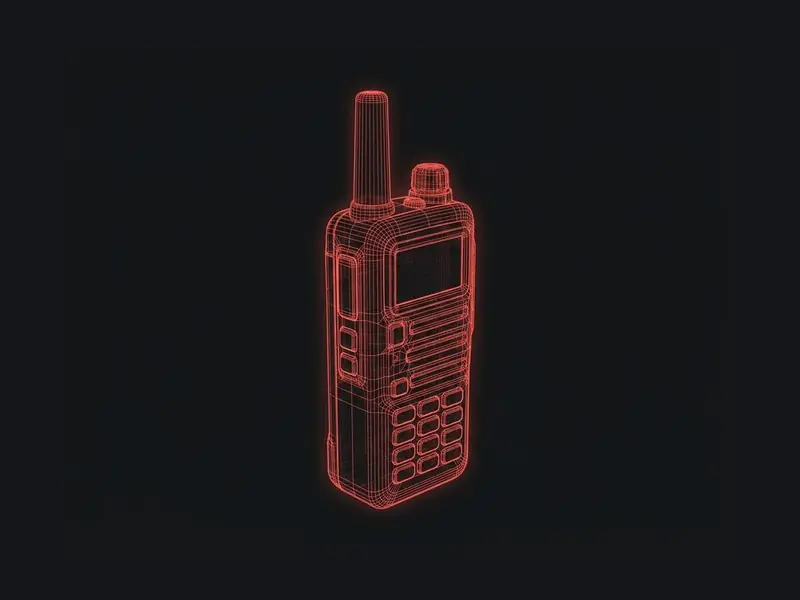
Two-way radio
CommsLinked to the field supervisor and CSUSA dispatch.
 05
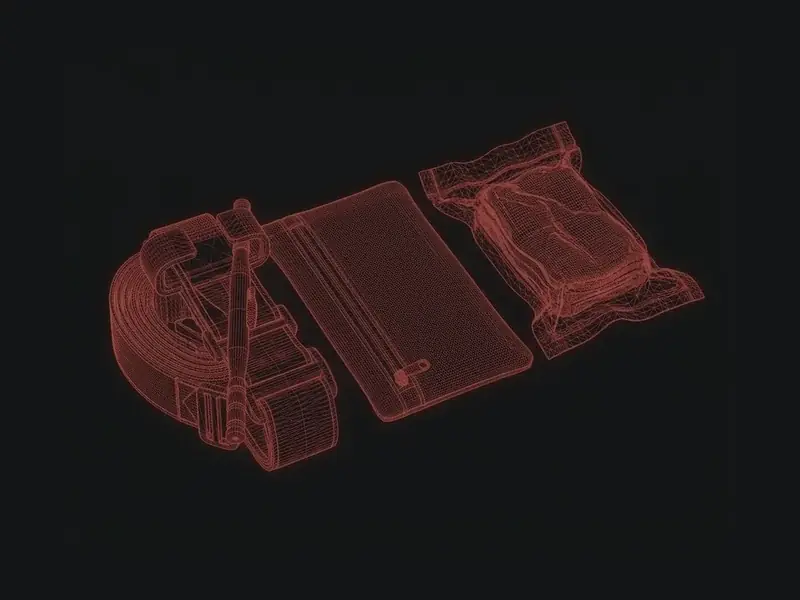
Trauma kit
MedicalA tourniquet and a bleeding-control dressing, for sites with broken glass and debris.
 06
Phone for reports
Daily activity reportPhotos of the site at each round, for the report and for your insurer.
This is an example loadout, not a fixed issue. Equipment varies by post, client and state, and not every officer carries every item shown. Permits and courses shown are the ones California’s Bureau of Security and Investigative Services (BSIS) requires. Nevada, Florida, New York, Texas and Arizona set their own rules.
Disaster recovery security in detail
After the fire trucks leave
Once the emergency is over, the property is still open. Fencing comes down, doors don't lock and materials sit on site.
Access for the right people
Officers keep a list of who is allowed on site, from adjusters and engineers to contractors and owners.
Records for the claim
Daily reports with photos and times help with insurance claims and with disputes over what was on site.
Through the rebuild
Coverage can move to Construction Security or Fire Watch as the rebuild gets going, with the same CSUSA supervisor.
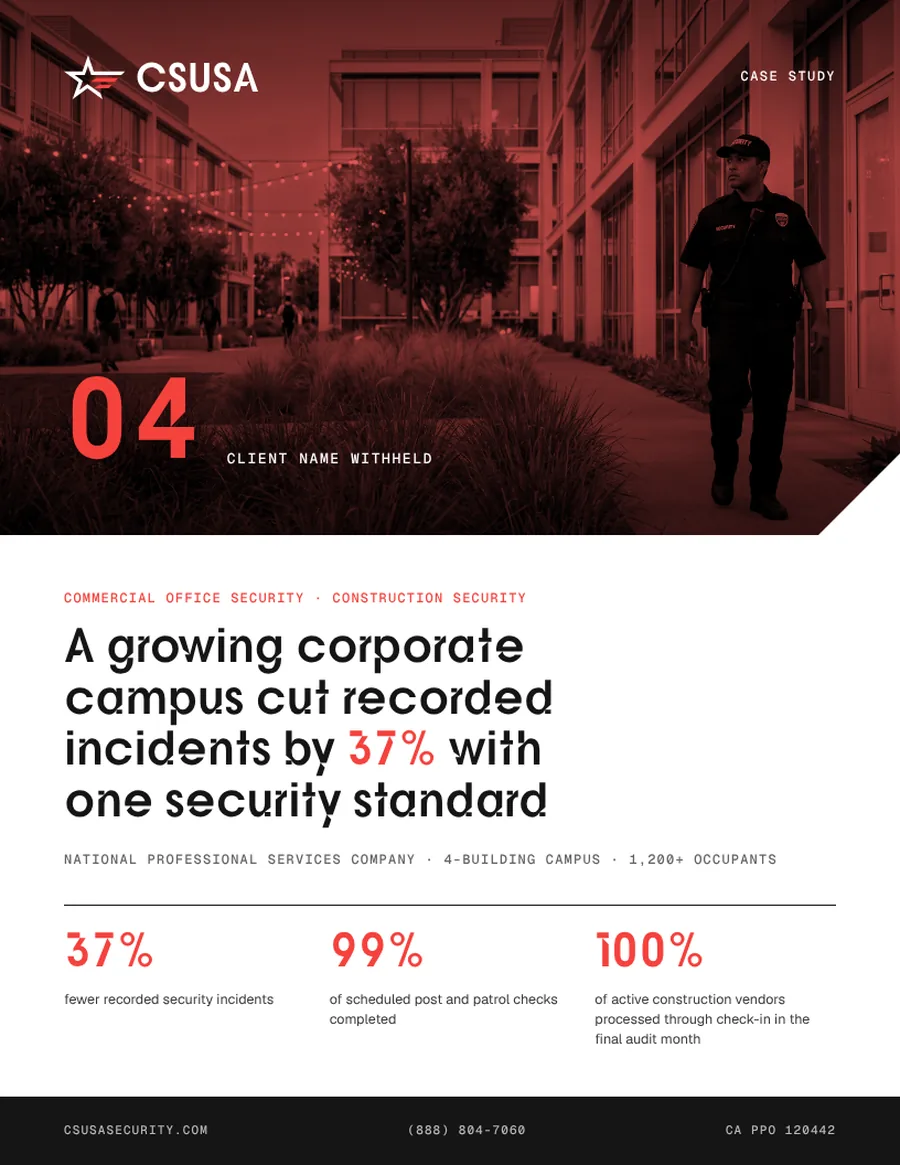
Case study 04
Client name withheld
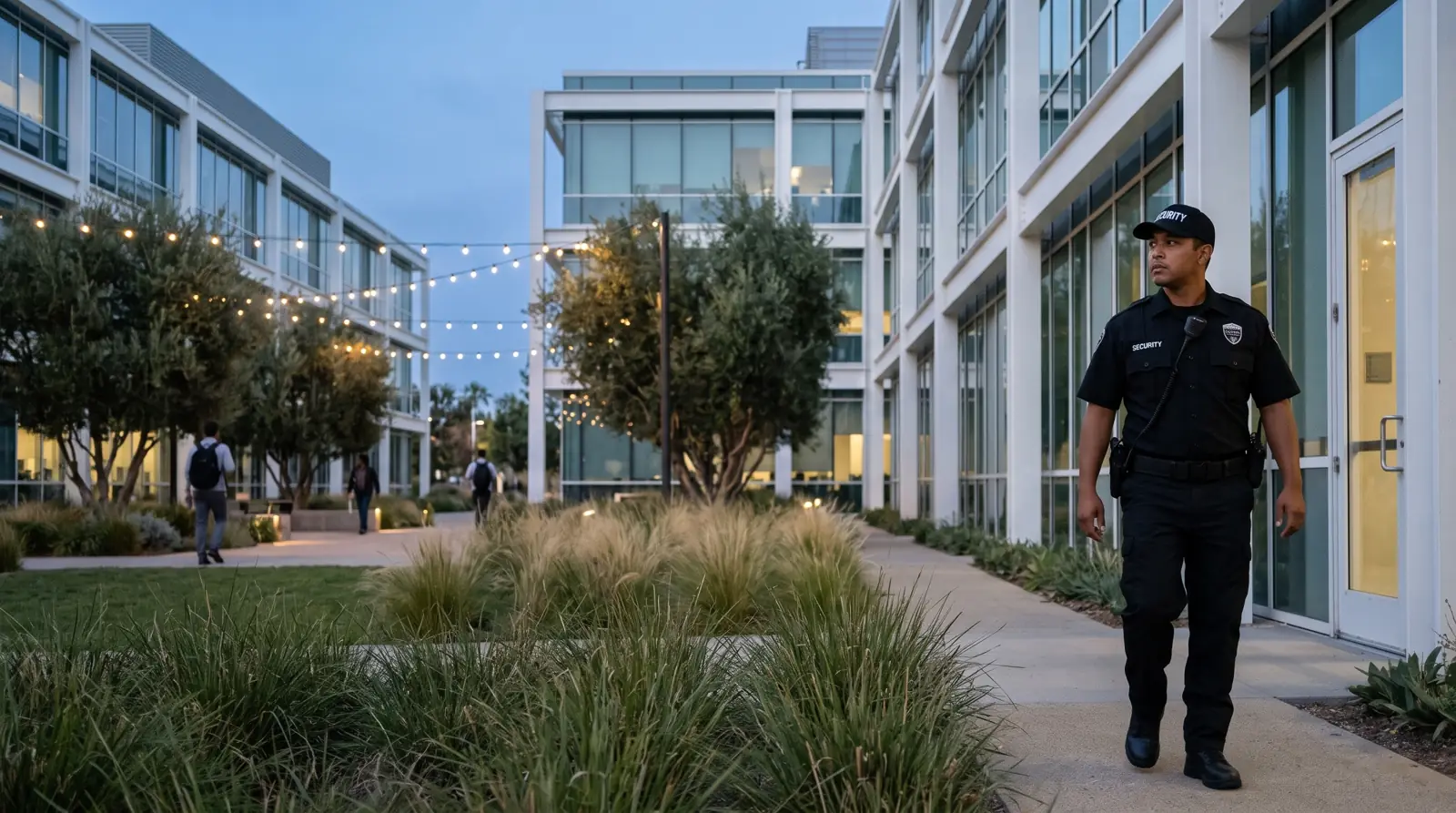
A growing corporate campus cut recorded incidents by 37% with one security standard
- 01
The problem
The campus grew to four buildings while construction was still underway. Each building had its own post orders, visitor rules and reports, and contractors used temporary entrances.
- 02
What we put in place
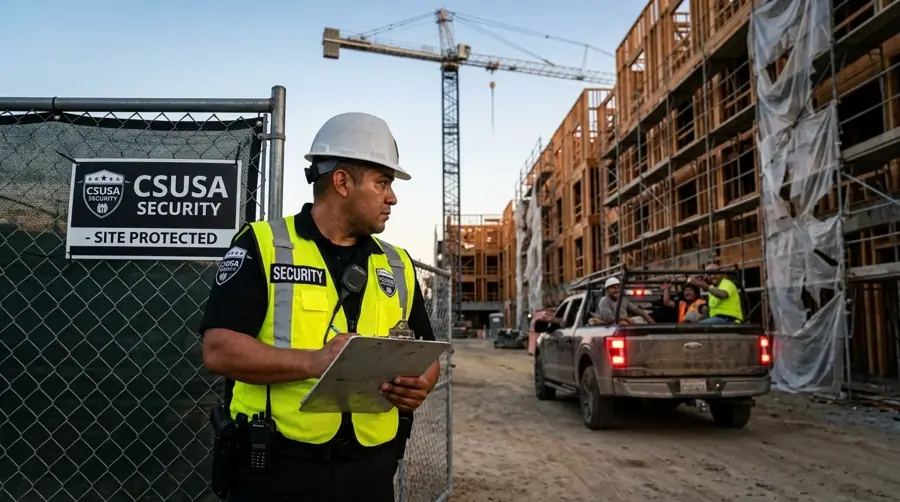
We assessed the whole campus with facilities, HR and the project team, then wrote one security plan with shared post orders and building-specific notes. Officers verified contractors at temporary gates and changed patrols as new space opened.
- 03
The result
Recorded security incidents fell 37% in six months. Officers completed 99% of scheduled post and patrol checks, and every active construction vendor went through check-in during the final audit month.
- fewer recorded security incidents
- 37%
- of scheduled post and patrol checks completed
- 99%
- of active construction vendors processed through check-in in the final audit month
- 100%
Full case study · PDF
How CSUSA kept security consistent while a headquarters added a building, parking and a construction zone.
How it starts
Free Security Assessment
A supervisor looks at the site and recommends a guard, patrols or both.
Book your Free Security AssessmentCoverage starts
Coverage starts on the date you agree on, with a supervisor checking in.
See case studiesQuestions
How much does disaster recovery security cost?
Disaster recovery security is billed by the hour for each officer. You get the monthly figure in writing after the Free Security Assessment. Prices subject to change without notice.
Can you work with our insurance adjuster?
Yes. Officers log adjusters and contractors on and off the site, and daily reports can be shared with your insurer.
Are your guards licensed?
Yes. CSUSA Security is a licensed private patrol operator in California (PPO 120442), and every officer holds a state guard card. We also hold security licenses in Florida, Nevada, New York, Texas and Arizona.
Is there a minimum contract?
No. Coverage runs month to month, you commit only to the rate on your quote, and that rate is locked for the life of the agreement. Overtime and holiday pay are on us, so the invoice matches the quote.
Are the officers CSUSA employees?
Yes. Every officer on your site works for CSUSA and reports to a CSUSA supervisor, with dispatch behind them.

Awards and affiliations