


Armed or unarmed guards: pay for the coverage your property needs
Armed officers cost more and carry more responsibility, and for most buildings an unarmed officer is the right call. What has happened at the property, and what you are protecting, decide which one you need.
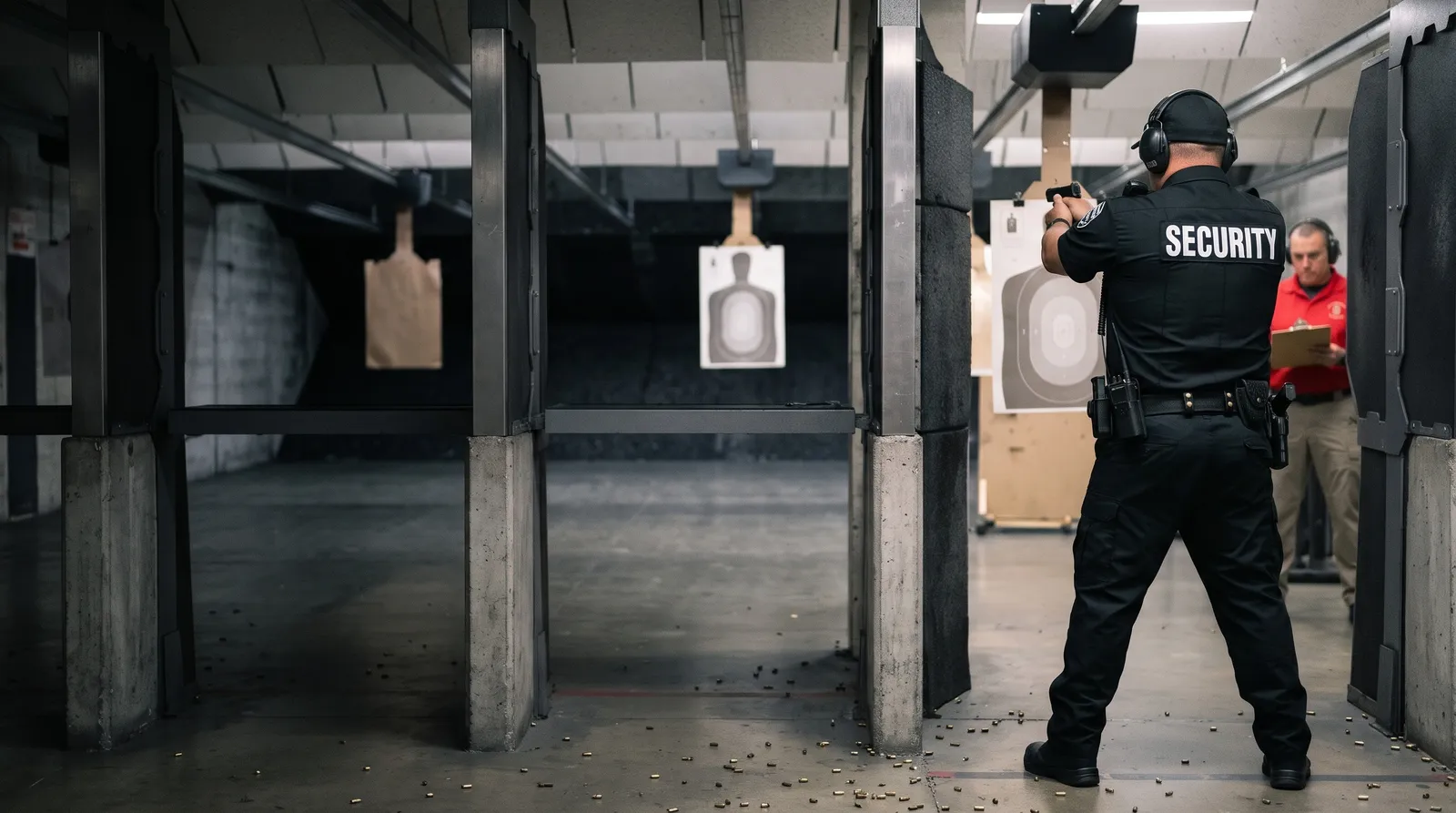
The question usually comes up after an incident. A break-in, a threat or a tense encounter in the lobby, and someone asks whether the next guard should carry a gun. Sometimes the answer is yes. Often a well-placed unarmed officer, good lighting and a patrol schedule solve the problem for less.
What an unarmed officer does
Unarmed officers handle most security work: lobby desks, access control, patrols, parking, events and fire watch. Their job is to be seen, check who comes in, notice problems early and call for help. In California they hold a guard card from the Bureau of Security and Investigative Services, which requires a background check, training before they start and 8 hours of continuing training each year.
What changes with an armed officer
An armed officer has all of that plus a state firearms permit. In California that means the officer is at least 21, has passed a Bureau-approved firearms course and a written exam, and requalifies on the range regularly. BSIS requires four range qualifications in each two-year permit term, with a review of use of force and de-escalation before each one.
Armed coverage costs more. The officer's training and permit, the insurance and the supervision all add to the rate.
When armed coverage makes sense
- Cash, jewelry, firearms or controlled substances are on site.
- There have been armed incidents at or near the property.
- A threat assessment points to a specific, credible risk.
- A client, insurer or contract requires it.
When unarmed is the better choice
- Residential and office lobbies, where the officer spends the day with tenants and guests.
- Hotels, hospitals and retail floors, where calm matters more than force.
- Construction sites and parking, where visibility and rounds do most of the work.
- Events, where officers manage lines, tickets and crowds.
Many properties use both: unarmed officers on the posts people see, and an armed officer or patrol for the hours or areas with the highest risk.
How to decide
Start with what has actually happened at the property and what you are protecting. A supervisor can walk the site, look at the incident history and recommend the right mix. That is what a Free Security Assessment is for.
CSUSA provides Unarmed Guards and Armed Guards in the states where we are licensed.
Questions
Are armed guards more expensive than unarmed guards?
Yes. The permit, range training, insurance and supervision add to the hourly rate. CSUSA puts the cost in writing after a Free Security Assessment. Prices subject to change without notice.
What permit does an armed guard need in California?
A firearms permit from the Bureau of Security and Investigative Services, on top of the guard registration. Officers requalify on the range several times during each two-year permit term.
Can an unarmed guard detain someone?
Guards can make a private person's arrest under California law in limited situations, and they are trained on it before they start. Most post orders tell officers to observe, report and call police.
Can we switch from unarmed to armed later?
Yes. Coverage can change as the risk changes. Talk to your account manager and the post orders will be updated.
More from the blog
- ComplianceFire watch: keep your building open while the sprinklers are down
- GuardsHow to hire a security guard company: what to check before you sign
- High-riseConcierge security: what an officer at your front desk does for your building
- ComplianceCheck a security company's license in California before you sign